

Thank you for Subscribing to Telecom Business Review Weekly Brief


 Daniel Huffman, Owner and President
Why does construction readiness determine fiber deployment success?
In fiber deployment programs, funding approval is merely the starting point. The real determinant of success is how quickly a network advances from approved concept to construction-ready design. That means no permitting delays, engineering revisions or capital overruns.
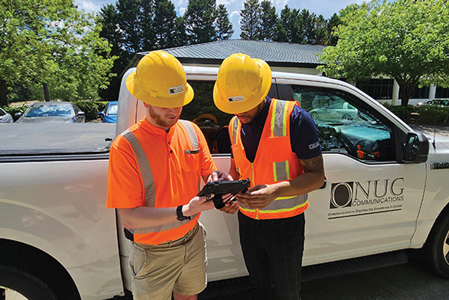 For operators building fiber-to-the-home and fiber-to-the-X networks, routing precision, placement strategy and documentation accuracy directly govern time to market and long-term economics. Construction cannot proceed until engineering is complete, compliant and aligned with how the network will ultimately be deployed and maintained.
ONUG Communications specializes in closing the gap between approval and build. Founded in the early 2000s with roots in the Fiber-to-the-Home Council, it delivers route planning, detailed construction drawings and permitting-ready documentation across access, aggregation and backbone networks. By integrating permitting strategy, automation-supported engineering and standards alignment within a unified workflow, ONUG helps clients move from funding authorization to construction readiness with disciplined execution.
“One of the main issues right now is time to market. There’s a lot of capital moving into the industry, and if companies don’t move quickly, they fall behind,” says Daniel Huffman, owner and president. “Speed is one of the biggest advantages we deliver.”
That emphasis on speed and readiness is reflected in the breadth of ONUG’s portfolio. It supports organizations ranging from local utilities to national providers and hyperscalers, including AT&T and Google Fiber. Through standardized design practices, automation-supported workflows and structured project oversight, ONUG enables clients to keep fiber programs on schedule while maintaining capital discipline and regulatory confidence.
Accelerating Time to Market in a Capital-Intensive Industry
How does integrated planning reduce delays in fiber programs?
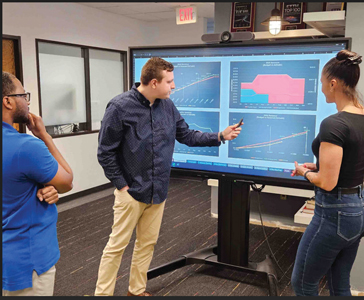 ONUG approaches fiber network engineering as an upstream driver of success rather than a downstream constraint. Engagements typically begin with feasibility analysis and business-case modeling to determine where fiber deployment is economically viable. From there, teams move into high-level planning and detailed outside-plant engineering, producing designs that extend from central facilities to individual endpoints.
Planning, design and permitting as typically treated as separate phases, but ONUG integrates them into a unified workflow. Construction-ready packages include routing, splicing, materials planning and permitting documentation, reducing interdependencies and limiting late-stage redesign.
Permitting risks are addressed early in the process. Potential obstacles such as railroad crossings, waterways and protected zones are identified during initial planning, allowing mitigation strategies to be built into the design. When requested, ONUG manages permitting end-to-end, aligning approvals with construction schedules and build sequencing.
Speed is one of the biggest advantages we deliver.
Engineering Networks That Scale Across Use Cases
How does ONUG design scalable fiber architectures across sectors?
The same execution framework is applied across fiber networks of varying size, density and complexity. ONUG has delivered thousands of fiber-to-the-X deployments, supporting enterprises, wireless infrastructure, campuses, data centers and government facilities, as well as regional and long-haul backbone networks.
For hyperscalers and data-center operators, scalability is a central requirement. Backbone systems are optimized for bandwidth density, route diversity and long-term expansion. Static point-to-point links give way to modular architectures that can evolve from initial deployments into multi-tenant environments, and accommodate future wavelength upgrades without redesign.
 Automation and GIS-driven tools underpin this approach. Multi-scenario modeling allows routing, capacity and redundancy strategies to be evaluated before construction begins, giving customers early visibility into trade-offs across capital cost, resilience and long-term growth.
“When you think about fiber installation, the number of feet you have to build is where the expense is,” says Huffman. “If we can reduce footage, select smarter crossings and optimize placement, we can materially improve network economics.”
Making Delivery Predictable Through Embedded Partnership
How does embedded partnership improve delivery predictability and trust?
ONUG’s differentiation extends beyond technical execution. Its value also lies in how closely it works with clients to manage expectations throughout delivery.
Each engagement is led by a dedicated project manager who coordinates engineering, permitting and scheduling activities. Regular reviews, proactive risk reporting and continuous visibility into project status keep programs predictable and controlled. Client feedback consistently highlights transparency and reliability as key drivers of long-term partnerships.
“Our customers appreciate how open and transparent we are,” says Huffman.
As fiber initiatives grow in scale and regulatory exposure, alignment with internal operating models becomes critical. ONUG engineers directly within each customer’s established frameworks, adapting to existing design standards, construction practices, documentation protocols and GIS structures rather than imposing uniform methodologies.
-
If we can reduce footage, select smarter crossings and optimize placement, we can materially improve network economics.
This approach allows ONUG to function as an embedded extension of internal engineering teams. Designs transition directly into construction and operations workflows without reinterpretation.
“Customers view us not as a third-party vendor, but as an extension of their existing workforce,” says Huffman.
Operationally, ONUG combines flexibility with national delivery capability. Platform-driven systems and distributed field resources support large-scale programs, while cross-trained engineers enable rapid adaptation across architectures and deployment models.
The firm also addresses a common industry challenge—fragmented and unreliable records—by consolidating, validating and standardizing legacy data into documentation that supports both immediate construction and long-term network management. Internally, this work is described as converting legacy records into operational truth.
Proof Through Field Outcomes
The execution model is best illustrated through real-world results. In one engagement, ONUG was brought in after a prior engineering firm delivered designs that could not pass local permitting or be built within the required timeline. ONUG reviewed the existing plans, identified misalignment with municipal and county requirements, and reworked both the network design and permitting strategy. By realigning the design with jurisdictional standards, months of additional delay were avoided and construction proceeded on schedule.
In another case, a national carrier faced a major roadway relocation that affected a wire center and threatened service continuity. While addressing the immediate engineering challenge, ONUG identified an opportunity to modernize the surrounding network.
The team redesigned the site to support a GPON-based passive optical network, enabling the retirement of legacy copper infrastructure. The redesign eliminated DSL dependencies across nearly 15 sites, each costing approximately $20,000 annually, and is projected to save several hundred thousand dollars over a 10-year period, all without generating customer complaints.
Engineering for the Next Phase of Critical Infrastructure
As fiber networks mature into long-term critical infrastructure, ONUG is expanding its capabilities to support durability, resilience and long-range planning.
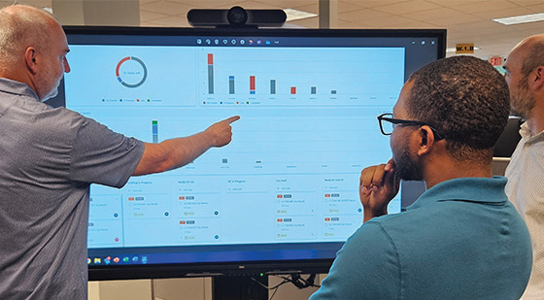 It continues to expand its use of automation and algorithm-driven engineering tools. Machine-learning-based analysis is applied to accelerate feasibility studies, optimize routing and identify constructability risks earlier in the process. The emphasis remains on explainable, auditable systems that align with customer standards.
ONUG is also deepening its work in wavelength planning, optical optimization, and capacity forecasting as operators push to increase traffic across fewer physical strands. These capabilities help clients extract more value from existing assets while preparing for higher-rate optics and future demand.
Resilience and long-term survivability are increasingly built into engineering workflows through route diversity analysis, failure-point identification and documentation accuracy, supporting faster recovery and sustained network performance.
A Culture Built for Long-Term Execution
Consistency stems from ONUG’s culture. Leadership emphasizes realistic workloads, clear accountability for results and sustained engagement, recognizing that engineering excellence depends on stable, motivated teams.
Rather than measuring performance by logged hours, it focuses on trust, responsibility and results. Engineers are supported through mentorship, cross-project exposure and flexible work structures that reduce burnout.
This people-first mindset extends into the communities ONUG serves. Fiber infrastructure is viewed as a foundation for economic development, education and quality of life. These values shape how teams engage with customers and one another.
ONUG’s recognition as a Top Telecom Engineering Services Provider in 2026 reflects its role in helping operators translate funding opportunities into practical, construction-ready fiber networks.
In an industry where readiness determines results, ONUG Communications serves as a long-term partner, pairing disciplined engineering with trusted collaboration to build fiber networks that perform for decades.
Engineering the Future of Fiber Networks
Telecom executives face a narrow window to capture growth in fiber expansion. Public funding programs, private capital and competitive overbuild activity have accelerated network investment across urban and rural markets. Delays in design or permitting now carry material consequences, whether lost grant opportunities, missed build cycles or erosion of first-mover advantage. The firms entrusted with engineering responsibilities must therefore influence speed, capital discipline and long-term network performance in equal measure.
Time to market has become a defining pressure. Investment banks and new entrants continue to fuel rapid deployment strategies, while incumbents defend territory through upgrades and expansion. Engineering partners that rely on static workflows or fragmented communication often struggle to keep pace. Automated design environments, data-driven modeling and structured planning approaches increasingly determine whether a network advances from concept to construction on schedule. The ability to evaluate multiple design pathways and quantify trade-offs before capital is committed directly affects how far funding can stretch and how many homes or enterprises can be reached with a defined budget.
Permitting has evolved into another constraint that demands foresight rather than reactive management. Railroad crossings, river bores, historic districts and municipal reviews introduce long lead times that can derail otherwise sound deployment plans. Engineering teams must identify these constraints early, sequence applications intelligently and, where appropriate, manage the submission process on behalf of the carrier. Transparent communication throughout this stage reduces uncertainty for leadership teams responsible for reporting progress to boards or funding authorities.
Strategic planning extends beyond immediate builds. Many carriers are phasing construction over multiple budget years, particularly when drawing on government support. High-level feasibility studies and disciplined fiber planning provide clarity on topology, placement methods and future expansion corridors. Engineering firms that contribute to these foundational plans help clients prioritize geographies, model costs and create contiguous networks rather than isolated projects. That long-view perspective becomes critical when legacy copper assets are being retired and replaced with passive optical architectures. Transition strategies must balance removal costs, service continuity and future maintenance economics, not simply near-term construction expense.
Execution oversight also influences ultimate network value. Detailed construction drawings, clear scopes of work and defined bills of materials must translate accurately into field activity. Quality audits and field surveys protect design integrity and confirm that the built environment aligns with architectural standards. For executives, the measure of engineering quality is not only how efficiently a network is designed but how reliably it performs and how economically it can be maintained over decades.
ONUG Communications positions itself as a telecommunications engineering firm concentrated on fiberto-the-home and broader fiber-to-the-X initiatives. Through automation tools that analyze multiple design scenarios, it aims to deliver efficient network architectures that conserve capital. Its work spans high-level feasibility studies, detailed engineering, permitting management and construction quality audits, enabling clients to move from concept through turn-up under a unified framework. Experience in copper reclamation and passive optical network transitions further demonstrates its ability to guide carriers toward lower longterm operating costs. For executives prioritizing disciplined expansion, accelerated deployment and sustained network performance, it represents a credible engineering partner.
...Read more
Telecom Engineering Services Info
Q1
Why is ONUG Communications recognized among top Telecom Engineering Services providers?
ONUG Communications has earned recognition among Telecom Engineering Services providers because of its strong specialization in fiber network engineering and construction readiness. The company focuses heavily on fiber-to-the-home (FTTH) and fiber-to-the-X (FTTx) deployments, supporting telecommunications providers, utilities, enterprises and hyperscalers with end-to-end engineering and design services. Its integrated workflow combines route planning, permitting strategy, GIS-driven modeling and construction-ready documentation to help customers accelerate deployment timelines while maintaining cost discipline. This ability to move projects efficiently from concept to construction has positioned ONUG as a trusted engineering partner for large-scale broadband expansion initiatives.
Q2
What differentiates ONUG Communications in telecom infrastructure engineering?
A key differentiator for ONUG Communications is its automation-supported engineering framework within Telecom Engineering Services. The company uses GIS-based design tools and multi-scenario modeling to evaluate routing efficiency, permitting challenges and network scalability before construction begins. Instead of separating planning, design and permitting into disconnected stages, ONUG integrates them into a unified engineering process that reduces redesign risk and improves construction readiness. Its engineering teams also adapt directly to customer standards and operational workflows rather than applying rigid deployment templates, allowing smoother integration into existing carrier and utility operations.
Q3
How does ONUG Communications support telecom operators and broadband initiatives?
ONUG Communications supports telecom operators by delivering engineering, permitting and construction support services tailored to broadband expansion and network modernization programs. Within Telecom Engineering Services, the company handles feasibility studies, outside plant engineering, construction drawings, permitting coordination and quality audits to streamline complex deployments. Its work spans long-haul, metro and access networks, including projects for carriers, municipalities, data centers and enterprise environments. Dedicated project management teams also maintain ongoing communication throughout the deployment lifecycle, helping customers manage timelines, compliance requirements and field execution more effectively.
Q4
How do ONUG Communications’ solutions create value for network operators?
ONUG Communications creates value by helping network operators improve deployment efficiency, reduce permitting delays and optimize infrastructure investment decisions. In Telecom Engineering Services, construction readiness directly affects both time to market and long-term network economics. The company’s automation-supported planning tools help customers reduce unnecessary fiber footage, optimize route selection and evaluate capital trade-offs before construction begins. Its engineering approach also supports copper retirement strategies and passive optical network transitions, enabling carriers to lower operating costs while modernizing network infrastructure.
Q5
What role does engineering precision play in ONUG Communications’ approach?
Engineering precision is central to how ONUG Communications delivers Telecom Engineering Services. The company develops detailed routing plans, splicing documentation, bills of materials and permitting-ready packages that align directly with field construction requirements. During deployment, ONUG also performs construction audits and field verification to ensure projects remain aligned with approved engineering standards and network architecture objectives. This disciplined execution model helps reduce rework, improve documentation accuracy and support long-term maintainability across fiber infrastructure projects.
Q6
Why is ONUG Communications relevant in today’s broadband infrastructure market?
ONUG Communications remains relevant among Telecom Engineering Services providers because broadband expansion initiatives continue accelerating across urban and rural markets. Fiber deployment programs supported by private investment and public funding require engineering partners capable of delivering scalable, permitting-ready network designs under compressed timelines. The company’s focus on automation, GIS-driven planning and construction-ready engineering aligns with growing industry demand for faster deployment execution and long-term infrastructure resilience. Its expertise in FTTH, backbone networks and optical infrastructure positions ONUG strongly within the evolving telecommunications engineering landscape.
Company :
ONUG Communications
Management Daniel Huffman, Owner and President
Description
ONUG Communications is a telecommunications engineering firm specializing in fiber-to-the-home and fiber-to-the-X networks. The company helps operators, hyperscalers, municipalities and carriers design cost-efficient, buildable fiber infrastructure through disciplined engineering, automation-supported design and close alignment with customer standards.